SolarMount.com FAQ
Frequently asked questions about solar mounting.
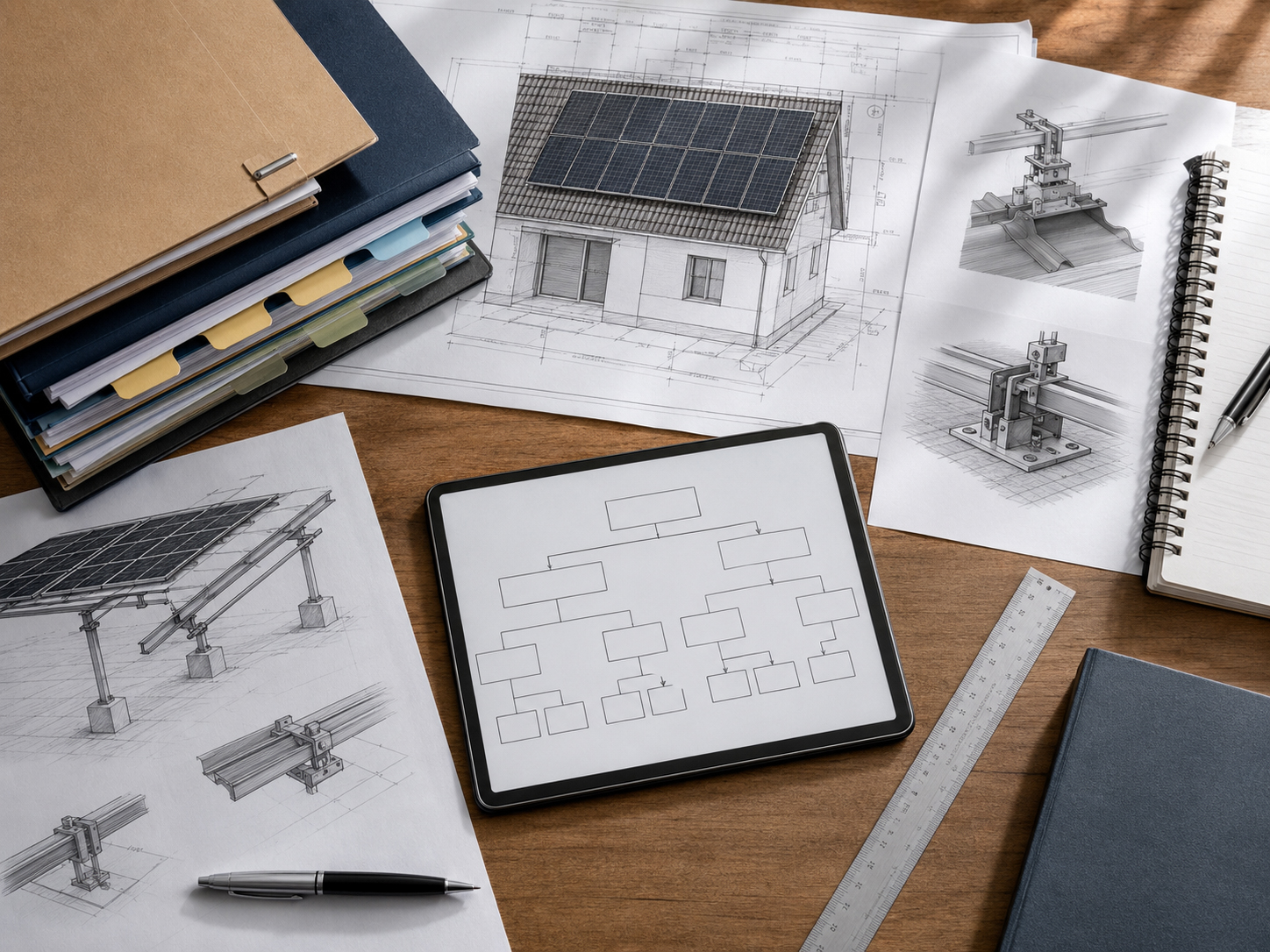
Roofs, rafters, flashing, sealant, ballast, ground mounts, carports, wind uplift, inspections, and waterproofing all shape the real quality of a solar installation.
Short answer
Solar mounting is where solar becomes construction.
The panels are the visible part. The mounting system is the roof, structure, waterproofing, and inspection story underneath.
SolarMount.com exists to make those hidden details easier to understand. A good solar project should explain how the system is attached, how the roof is protected, how loads move into structure, and how the installation can be serviced later.
SolarMount.com rule: the best time to ask roof questions is before installation, before penetrations are made, and before the panels cover the mounting details.
Roof and leak questions
The questions homeowners usually ask first.
These answers are educational and general. Actual project decisions depend on roof type, approved plans, manufacturer instructions, engineering, code, and field conditions.
Will solar make my roof leak?
Solar should not make a roof leak when the mounting method, roof condition, flashing, sealant, and inspection sequence are handled correctly. The risk rises when the roof is old, damaged, poorly reviewed, or when waterproofing details are hidden before they are checked.
Should I reroof before solar?
Maybe. If the roof is near the end of its service life, brittle, leaking, heavily patched, ponding, or difficult to service, reroofing before solar may be smarter than removing and reinstalling panels later.
What should I ask before panels cover the roof?
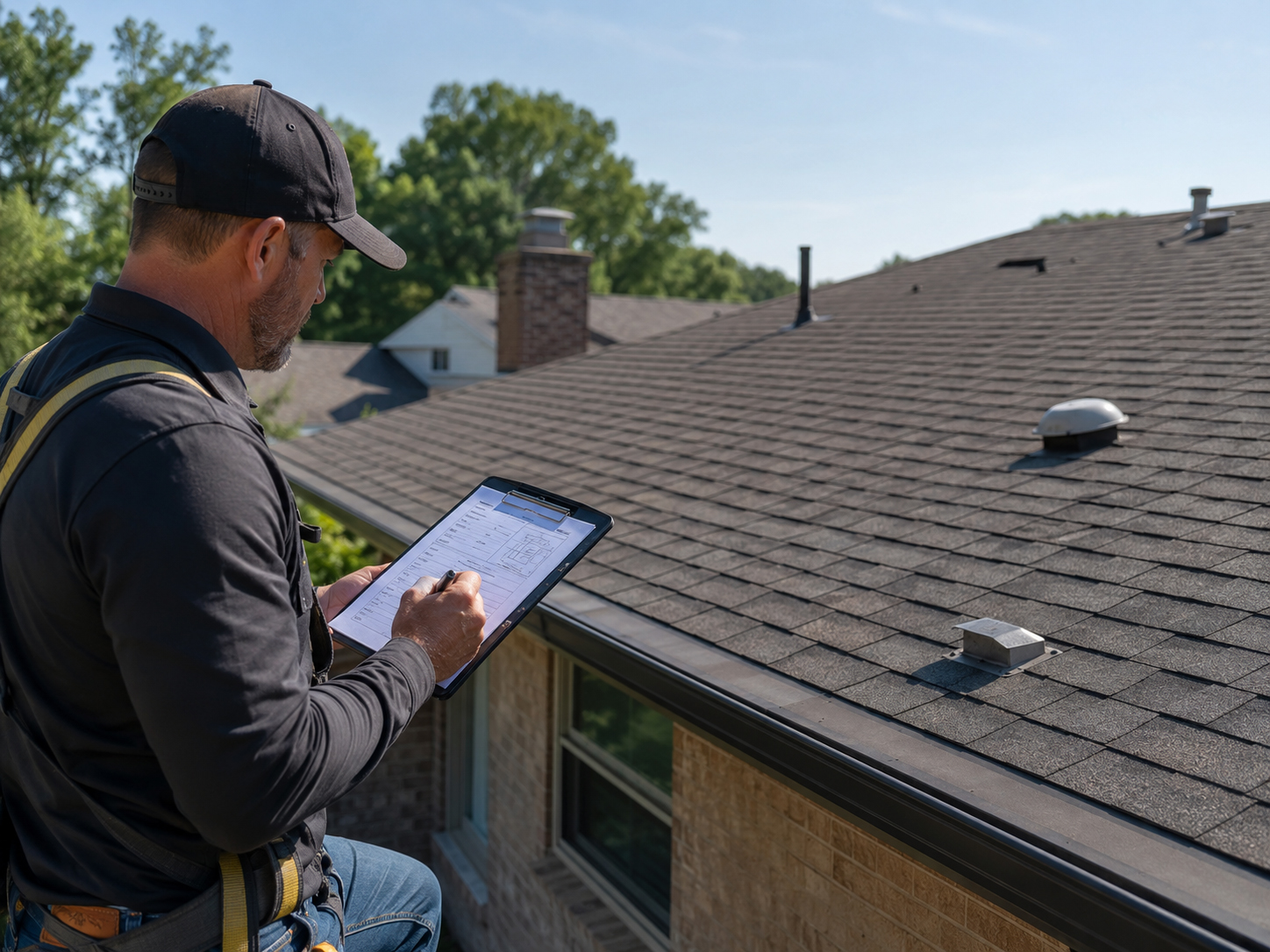
Ask where the mounts go, how rafters or structural targets are found, how penetrations are flashed, what sealant is used, what gets inspected, and whether photos are taken before panels hide the work.
Is sealant enough to stop leaks?
Sealant can support an approved waterproofing detail, but it should not be treated as the whole plan. Flashing, roof-layer integration, roof condition, and correct placement matter first.
Waterproofing
Why does SolarMount.com keep saying waterproofing is job one?
Because the roof’s first job is still to keep water out.
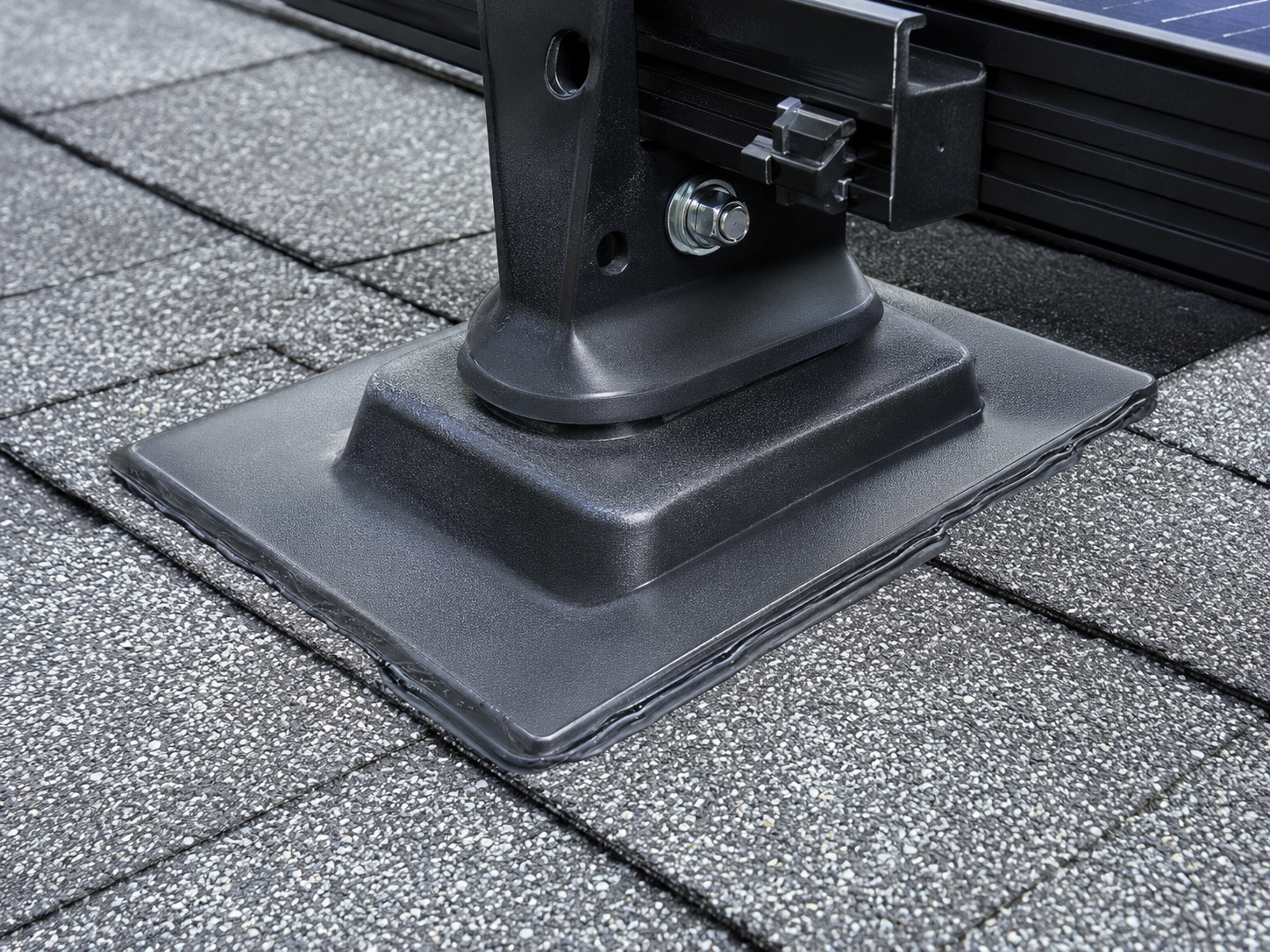
Solar panels produce power, but the building still depends on the roof system. Penetrations, mounting feet, conduit, flashing, sealant, and roof-contact points must be planned so the roof remains dry, inspectable, and serviceable.
Practical rule: do not let rails and panels hide roof-protection details before those details are checked.
Mounting hardware questions
Mounting feet, rails, clamps, and fasteners.
What are solar mounting feet?
Mounting feet are the hardware points where rails connect down to the roof and structure. They are small parts with big responsibility: attachment, load transfer, flashing, and waterproofing.
Why do lag bolts need to hit rafters?
In many sloped-roof systems, the attachment must transfer solar loads into real framing. The roof covering sheds water; the rafters or approved framing carry the load.
Why do rails and clamps matter?
Rails and clamps hold the visible array, but they depend on the mounting-foot layout, module requirements, wind design, structural support, grounding, bonding, and serviceability.
What is a load path?
A load path is the route forces take from the panel into the building or ground: module to clamp, clamp to rail, rail to mount, mount to rafter, roof, ballast, post, steel, or foundation.
Structural review
When does solar need structural review?
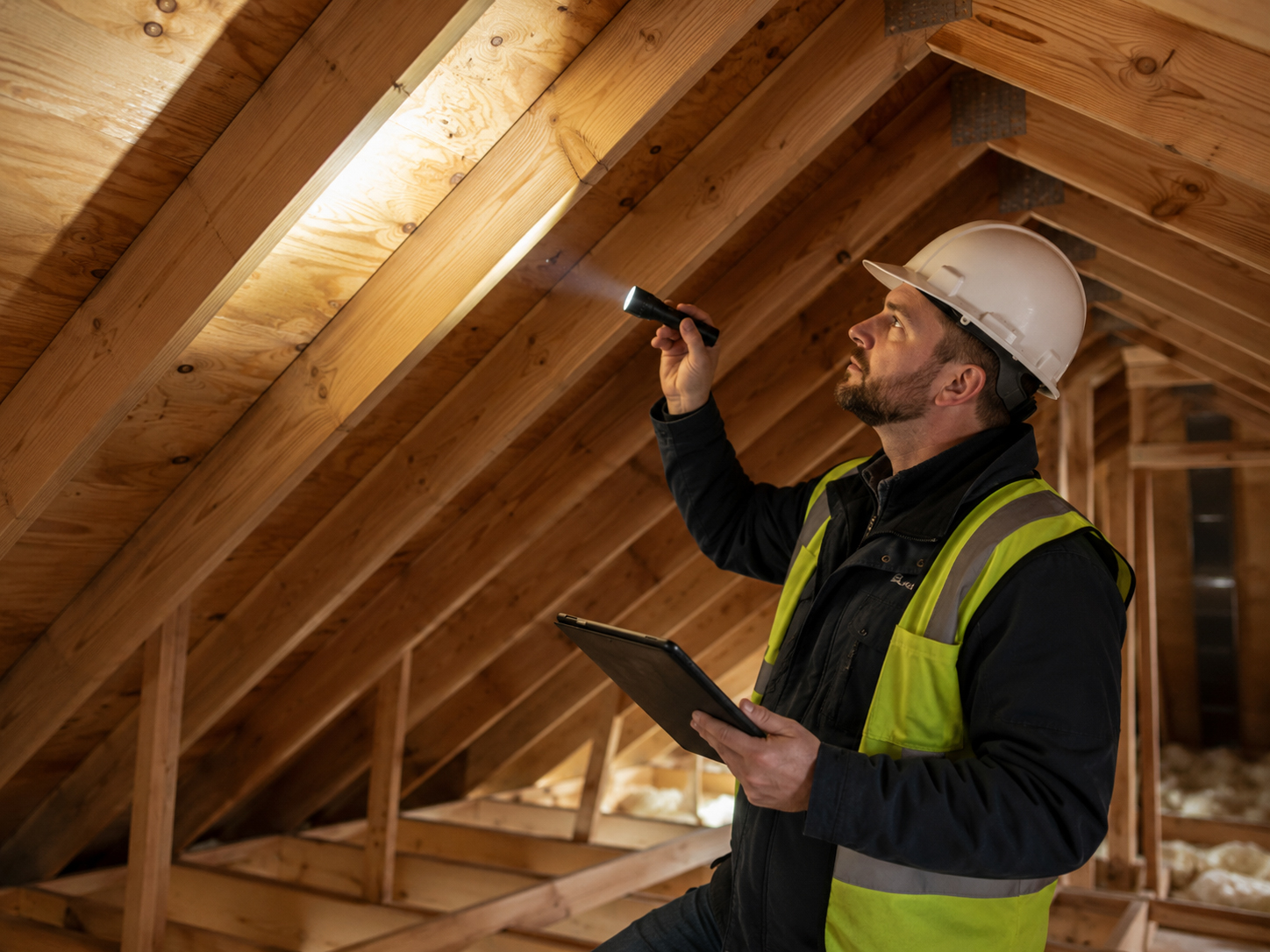
Structural review is needed when the roof, mounting method, load, or support path requires deeper confirmation.
Older roofs, long spans, unusual framing, high-wind sites, heavy systems, ballasted flat roofs, solar carports, ground mounts, sistered rafters, and building-integrated solar may all require more structural attention.
Rafters, trusses, steel, ballast, posts, or foundations.
Dead load, wind uplift, lateral force, service loads, and long-term weathering.
The field work should match the plan set and inspection requirements.
Roof type questions
Does the answer change by roof type?
Yes. Roof material changes the mounting method, waterproofing detail, access plan, and serviceability.
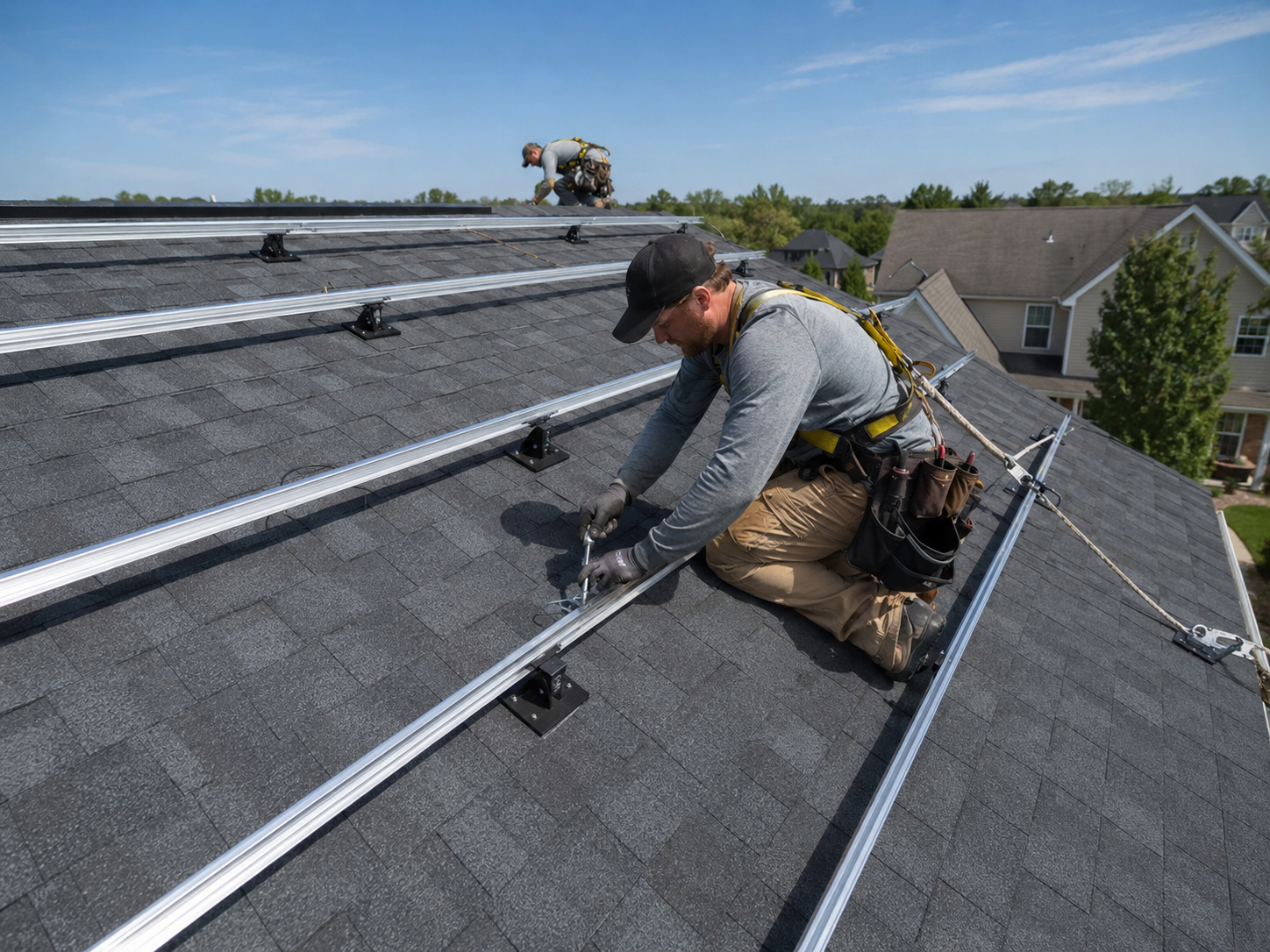
Composition Shingle
Common, but still requires rafter attachment, flashing, sealant, and roof review.
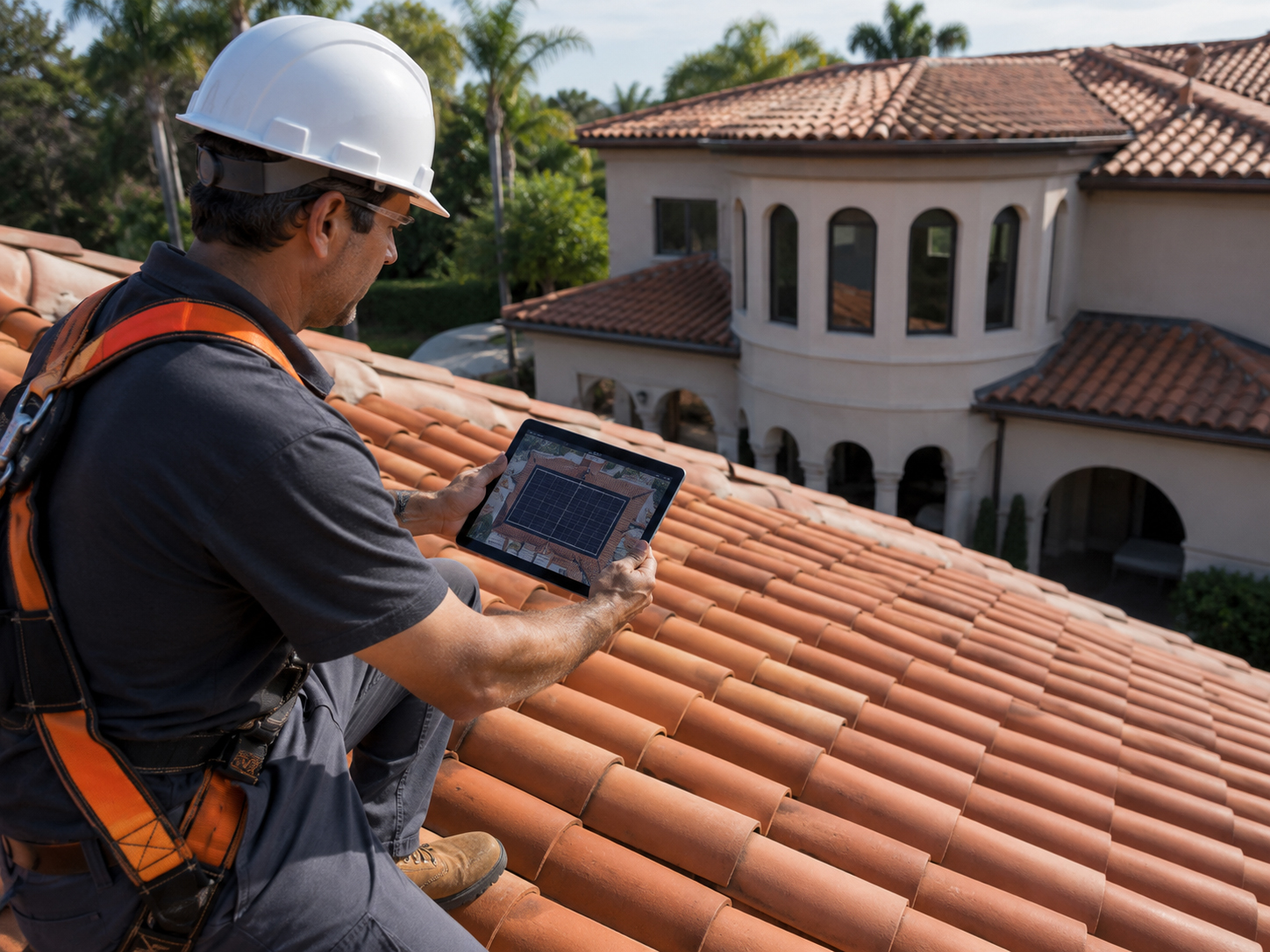
Tile Roofs
Tile condition, underlayment, access, replacement tiles, and serviceability matter first.
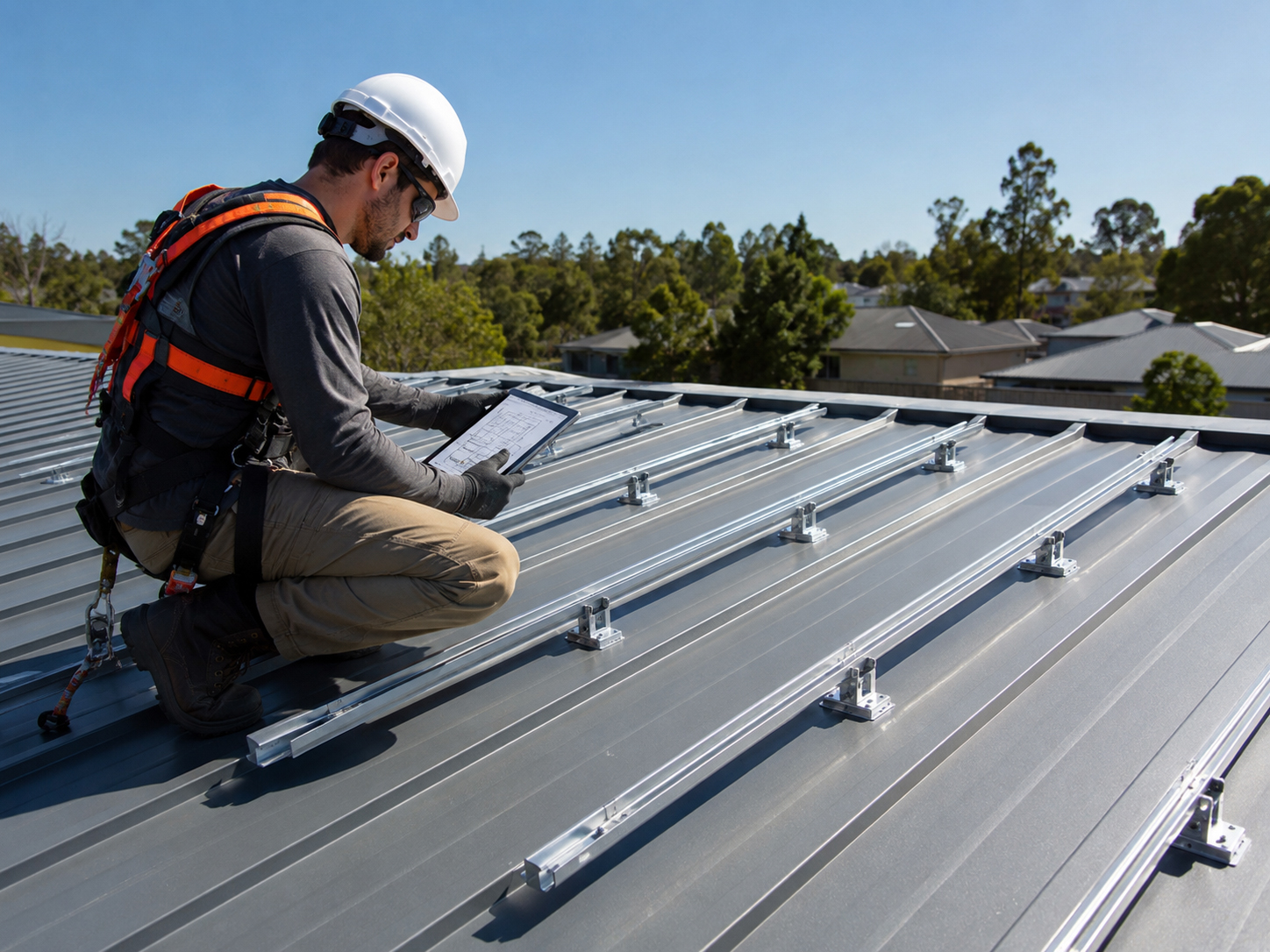
Metal Roofs
Profile, seam type, clamps, coatings, corrosion, fasteners, and manufacturer guidance matter.
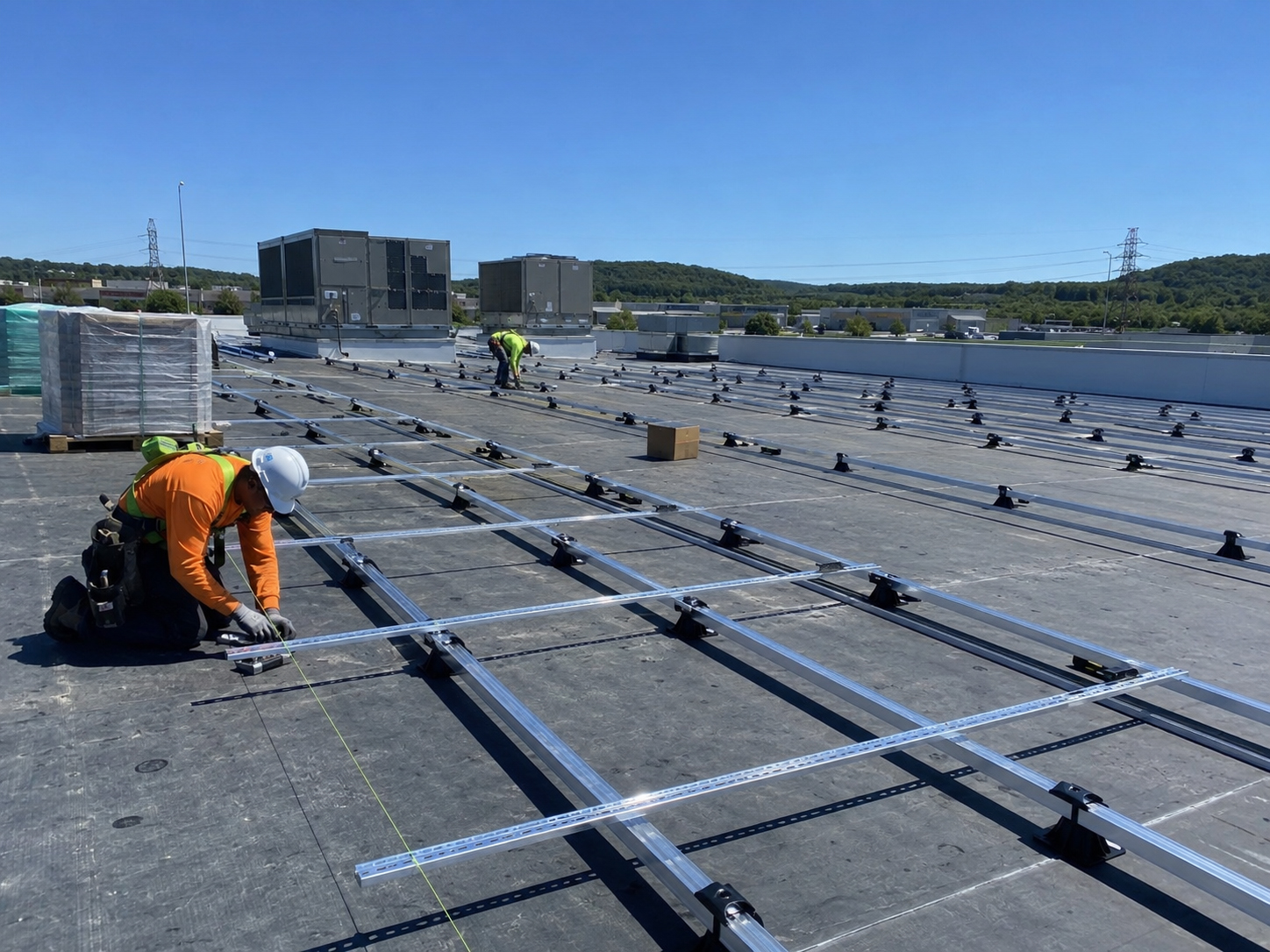
Flat Roofs
Membrane condition, ballast, roof loading, drainage, and access paths drive the review.
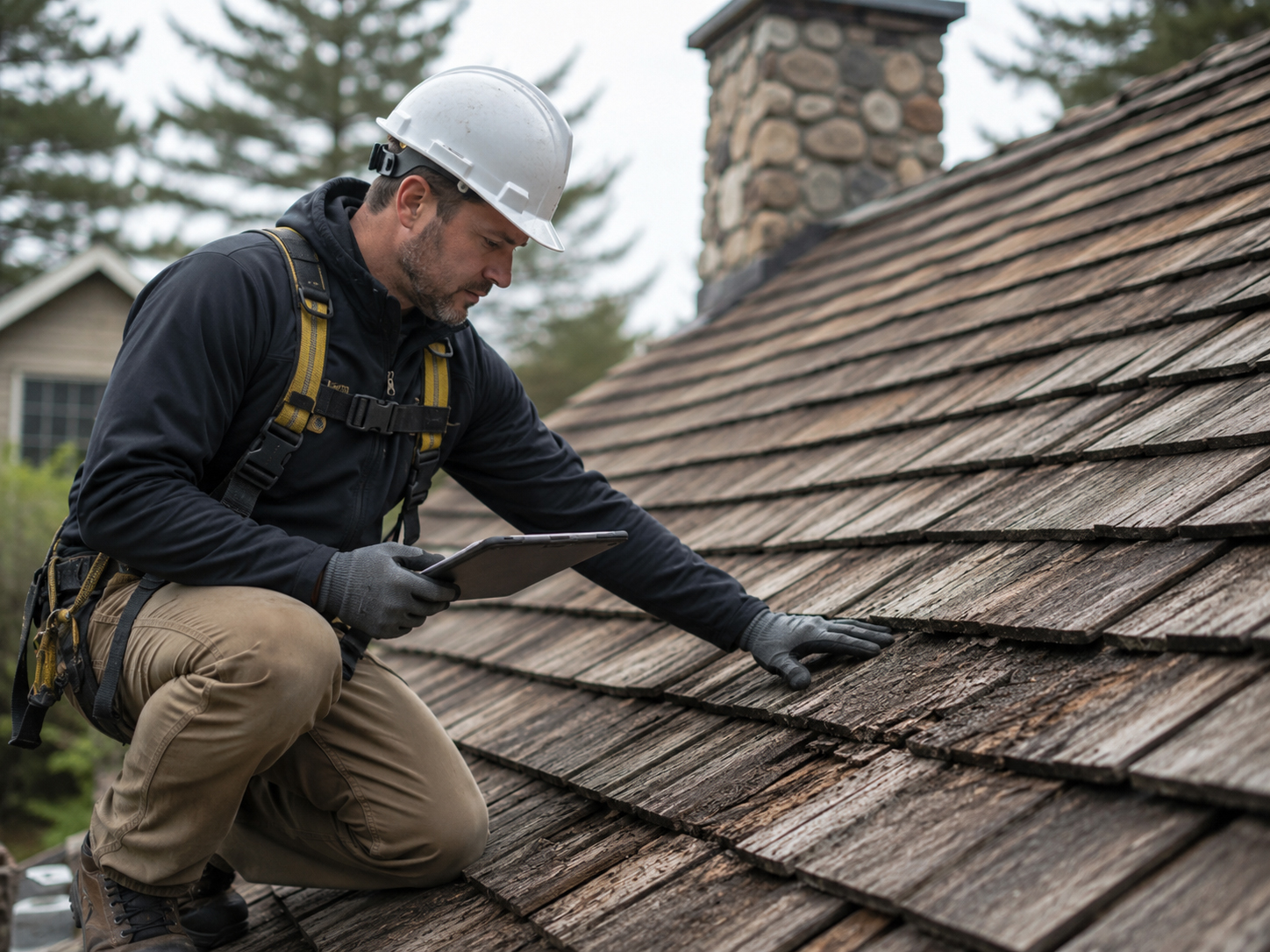
Wood Shake
High-caution roof review: age, fire-safety concerns, condition, and reroofing questions.
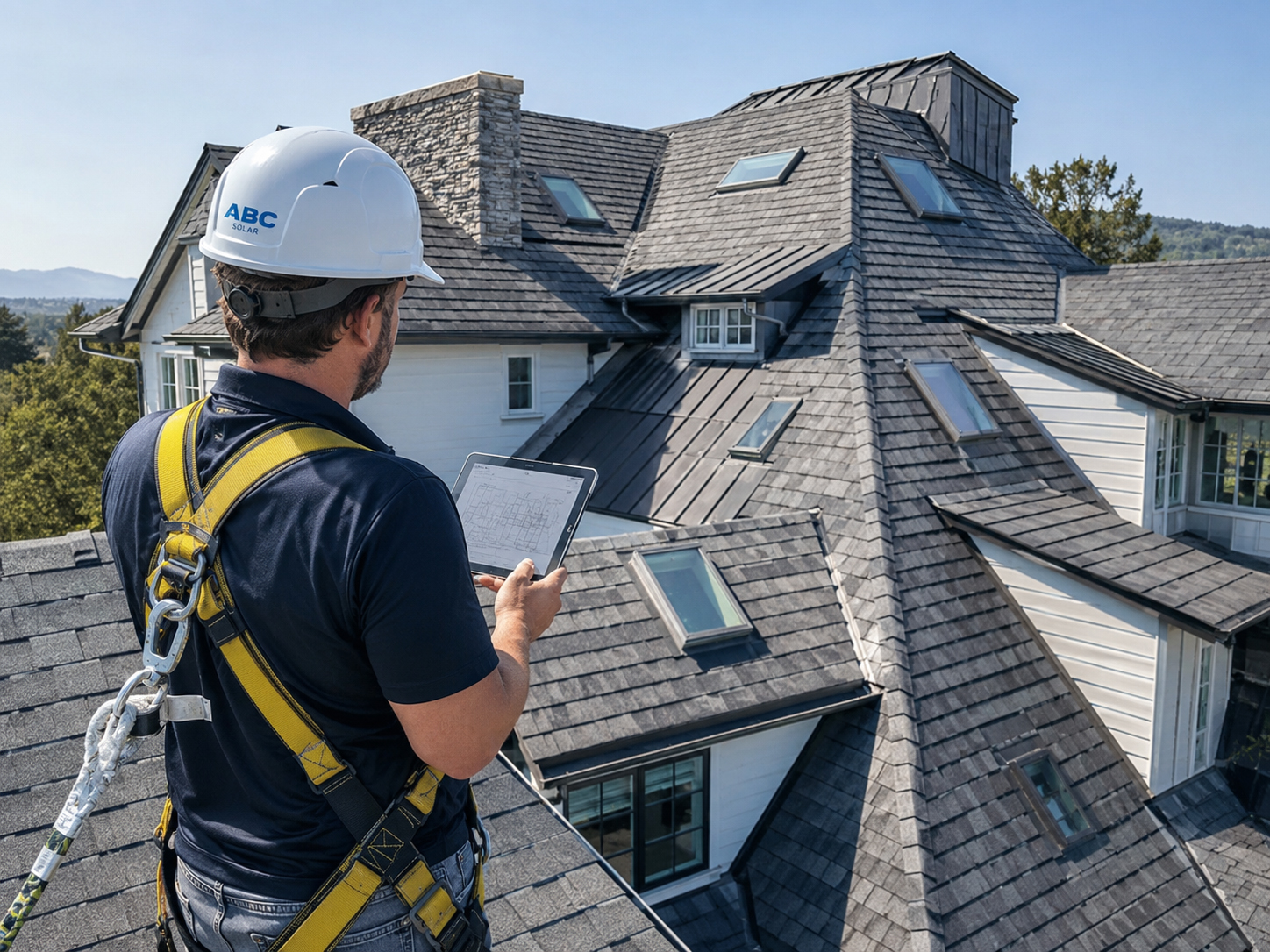
Unique Roofs
Hips, valleys, skylights, dormers, mixed materials, and access constraints change the plan.
Flat roof questions
Why are flat roofs different?
Flat roofs often involve membranes, ballast, drainage, roof load, and commercial access requirements.
Ballasted flat roof systems can reduce penetrations, but they add weight. The roof structure, membrane protection, drainage, wind zones, walk paths, and service access must be reviewed.
Good owner question: “How does this design protect the roof membrane, justify the added ballast, and keep drains and service paths clear?”
Ground mount, carport, and BIPV questions
What if the solar is not on a normal roof?
Ground mounts, carports, high-rise systems, and building-integrated solar each create their own construction questions.
Ground mount questions
Ask about posts, pipe, driven steel, ballast, trenching, inverter placement, wire distance, service access, vegetation control, wind exposure, and inspection requirements.
Solar carport questions
Ask about foundations, steel, column placement, parking layout, vehicle clearance, wind loads, drainage, EV charging readiness, electrical routing, and inspection.
High-rise solar questions
Ask about wind at height, structural attachment, facade or roof envelope, safe access, electrical routing, building management, and serviceability.
Building-integrated solar questions
Ask whether the solar is part of the roof, facade, canopy, glazing, or envelope, and how water, structure, wiring, access, and replacement are handled.
Permits and inspection
What should inspection prove?
Inspection should confirm that the installation matches the approved plan and code requirements.
The permit and inspection path should support the mounting method, roof type, structural path, electrical routing, equipment placement, waterproofing, labeling, and final sign-off. Good work should be visible, documented, and explainable.
Plain-language summary: the plan set and the field work should tell the same story.
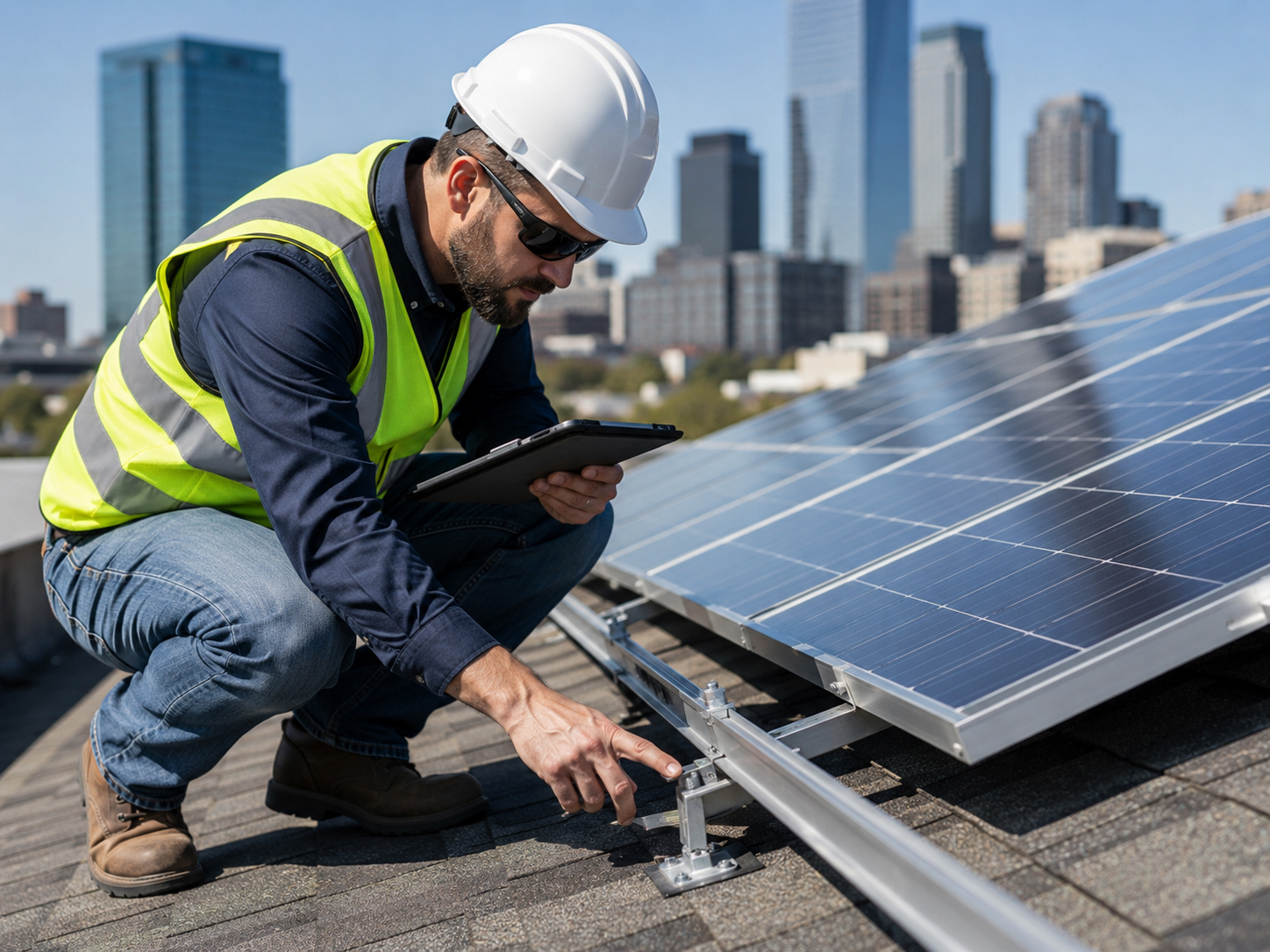

FAQ conclusion
The smartest solar question is often a roof question.
Before panels go up, understand the roof, mounting method, waterproofing, structural path, inspection requirements, and future service plan.