Commercial roof field guide
Flat roof solar mounting is a roof-load and waterproofing conversation.
Flat roof solar is not simply panels on a wide-open surface. The project must review membrane condition, ballast, roof loading, drainage, wind uplift, tilt direction, walk paths, equipment access, and long-term serviceability.
Flat does not mean simple
The roof membrane is part of the solar system now.
A flat roof solar array must work with the roof surface, not merely sit on it.
Commercial flat roofs often use membrane systems that must remain watertight while supporting solar racking, ballast, service traffic, conduit, equipment, and inspection access. The solar design should protect the membrane, preserve drainage, respect roof load limits, and remain serviceable after installation.
SolarMount.com rule: flat roof solar should begin with roof condition, membrane review, drainage, load capacity, ballast strategy, and service access — before final panel layout.
Flat roof checklist
What should be reviewed before flat roof solar is installed?
Flat roof mounting succeeds when the solar plan respects the roof membrane, roof structure, water movement, and maintenance needs.
Roof membrane condition
Review TPO, PVC, EPDM, modified bitumen, built-up roofing, coatings, seams, repairs, ponding areas, and roof age before placing solar equipment.
Roof loading
Ballast, racking, modules, service traffic, and equipment add weight. The roof structure must be reviewed for the proposed load.
Drainage
The array should not block drains, create ponding, trap debris, or make roof maintenance harder.
Ballast strategy
Ballast can reduce penetrations but increases weight and wind-design responsibility.
Wind uplift
Low-slope commercial arrays must resist uplift, sliding, overturning, and edge-zone wind exposure.
Service access
Leave walk paths for roofers, electricians, fire access, inspectors, and future solar maintenance.

Ballast and weight
Ballasted systems reduce penetrations, but they add weight.
Less roof penetration does not mean less engineering.
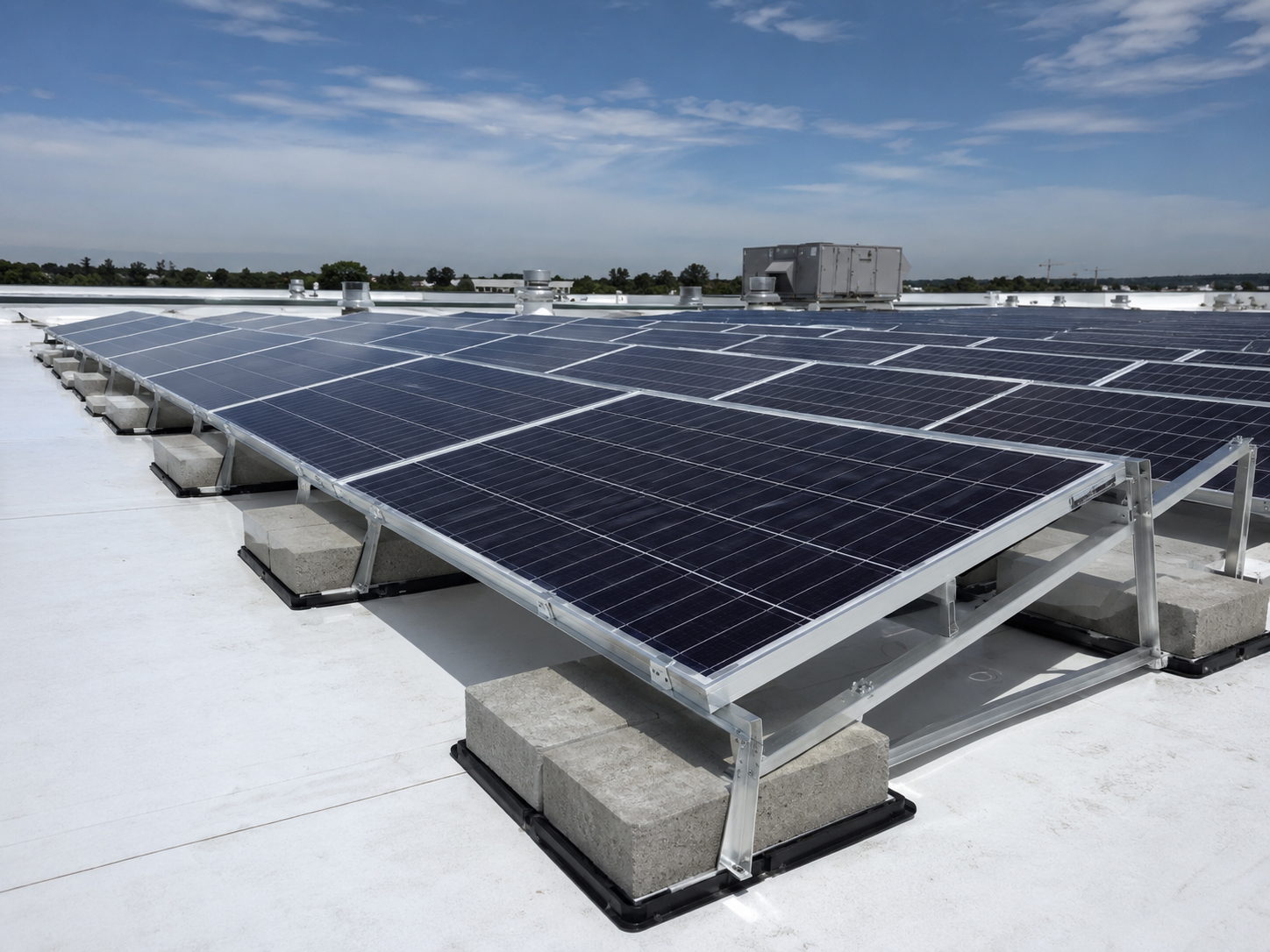
Ballasted flat roof systems can be attractive because they may reduce the number of roof penetrations. But ballast must be reviewed for roof load capacity, wind zones, array height, tilt, parapets, roof membrane protection, and service conditions.
Practical rule: ballast is not free. It is weight. The roof must be able to carry it, and the design must explain why it stays put in wind.
Flat roof mounting methods
Different flat roof layouts solve different problems.
The correct flat roof method depends on the roof, the building, the wind exposure, and the project goals.
Ballasted Flat Roof Racking
Weight-based racking can reduce penetrations but demands roof-load and wind review.
Commercial Flat Roof Solar
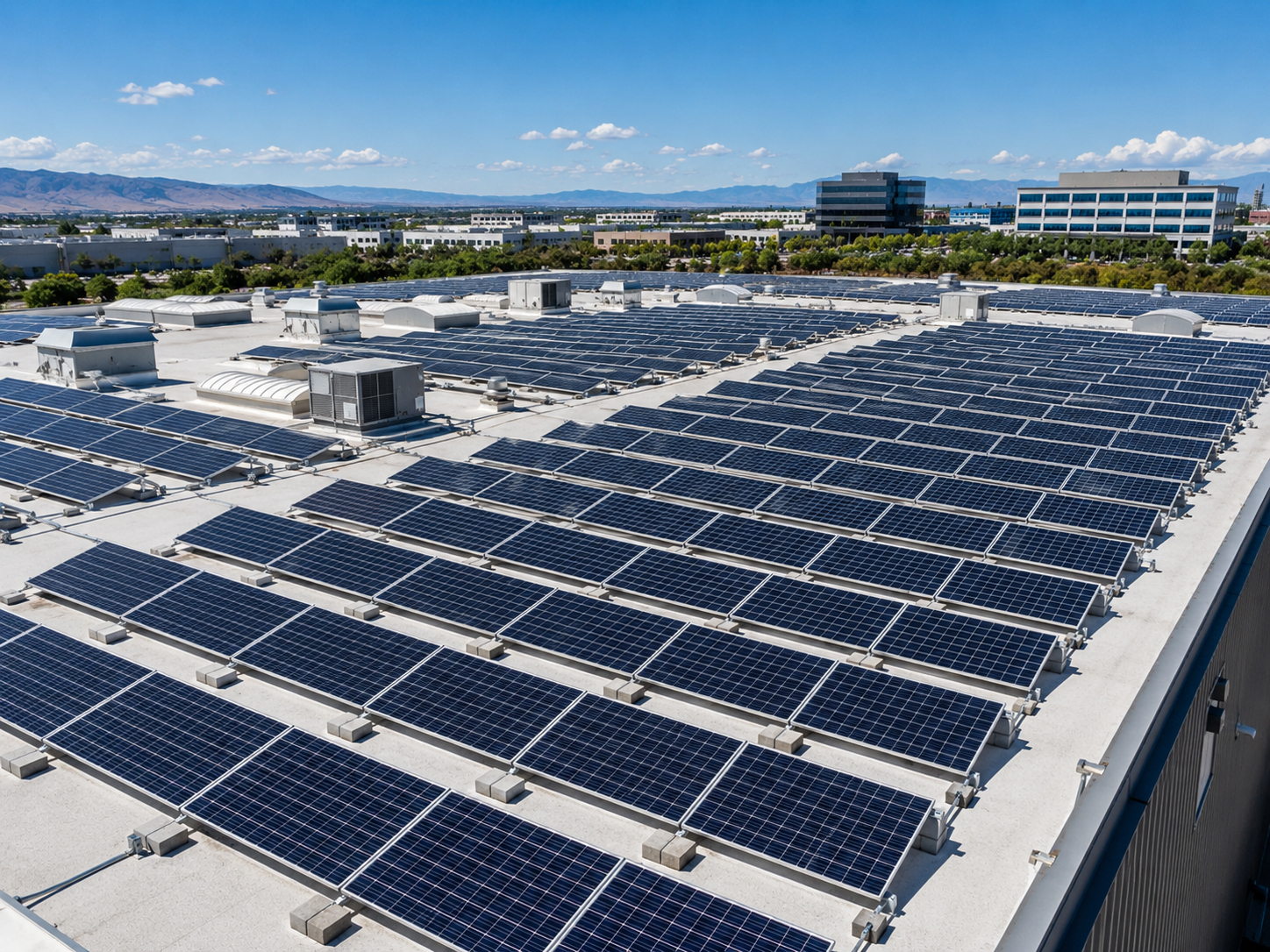
Large roof areas require coordinated layout, access paths, conduit, and equipment planning.
Reverse Tilt Racking
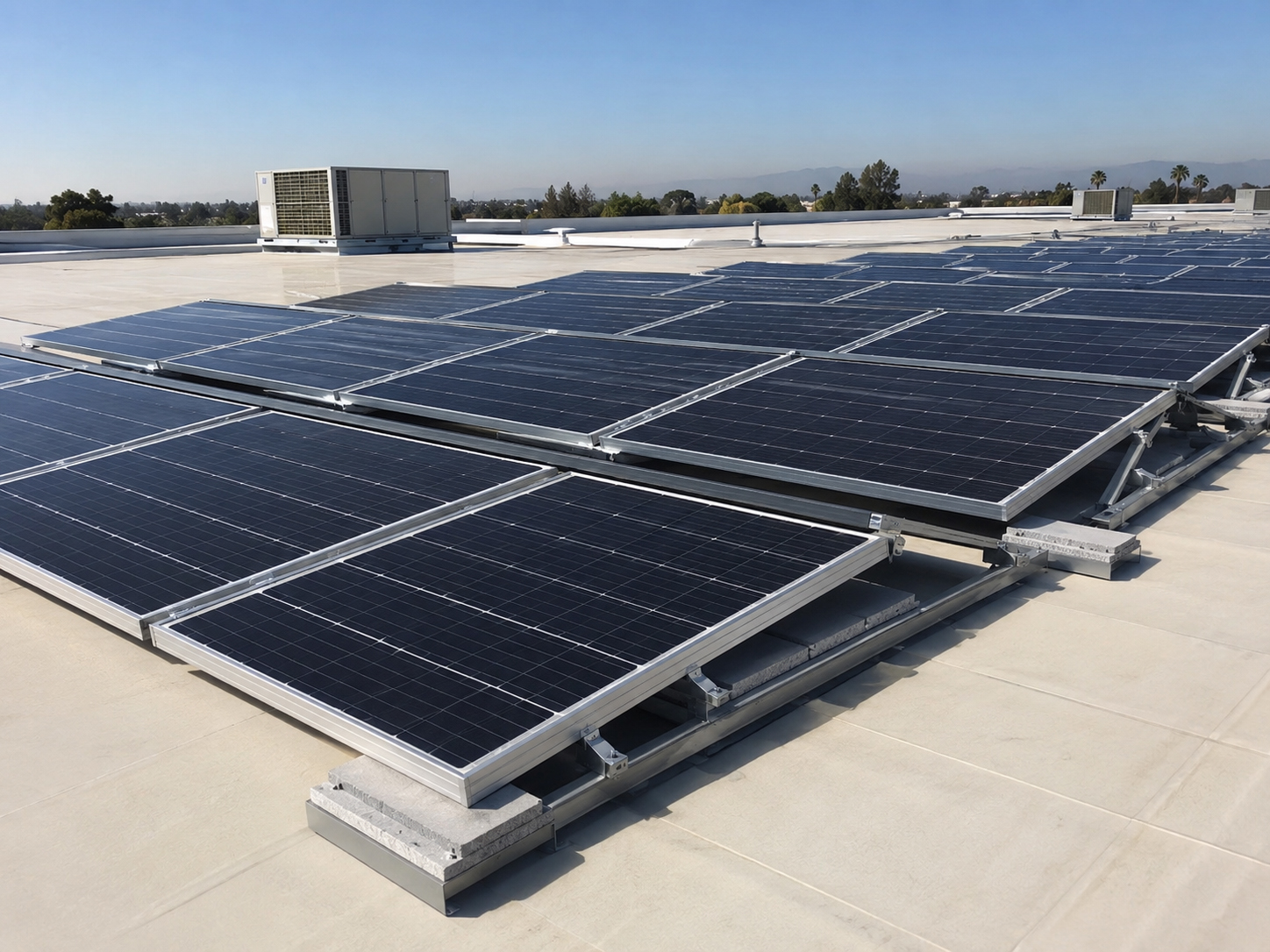
Reverse tilt can solve certain layout problems but changes wind, spacing, and production review.
Important: this page is educational. Actual flat roof solar mounting, ballast weight, structural loading, membrane protection, drainage, wind uplift, roof penetrations, electrical routing, and inspection requirements must follow the approved plan set, manufacturer instructions, roofing requirements, engineering requirements, fire code, and local code.
Membrane protection
The array must not abuse the roof membrane.
The roof membrane is the waterproofing system. It needs protection during and after installation.
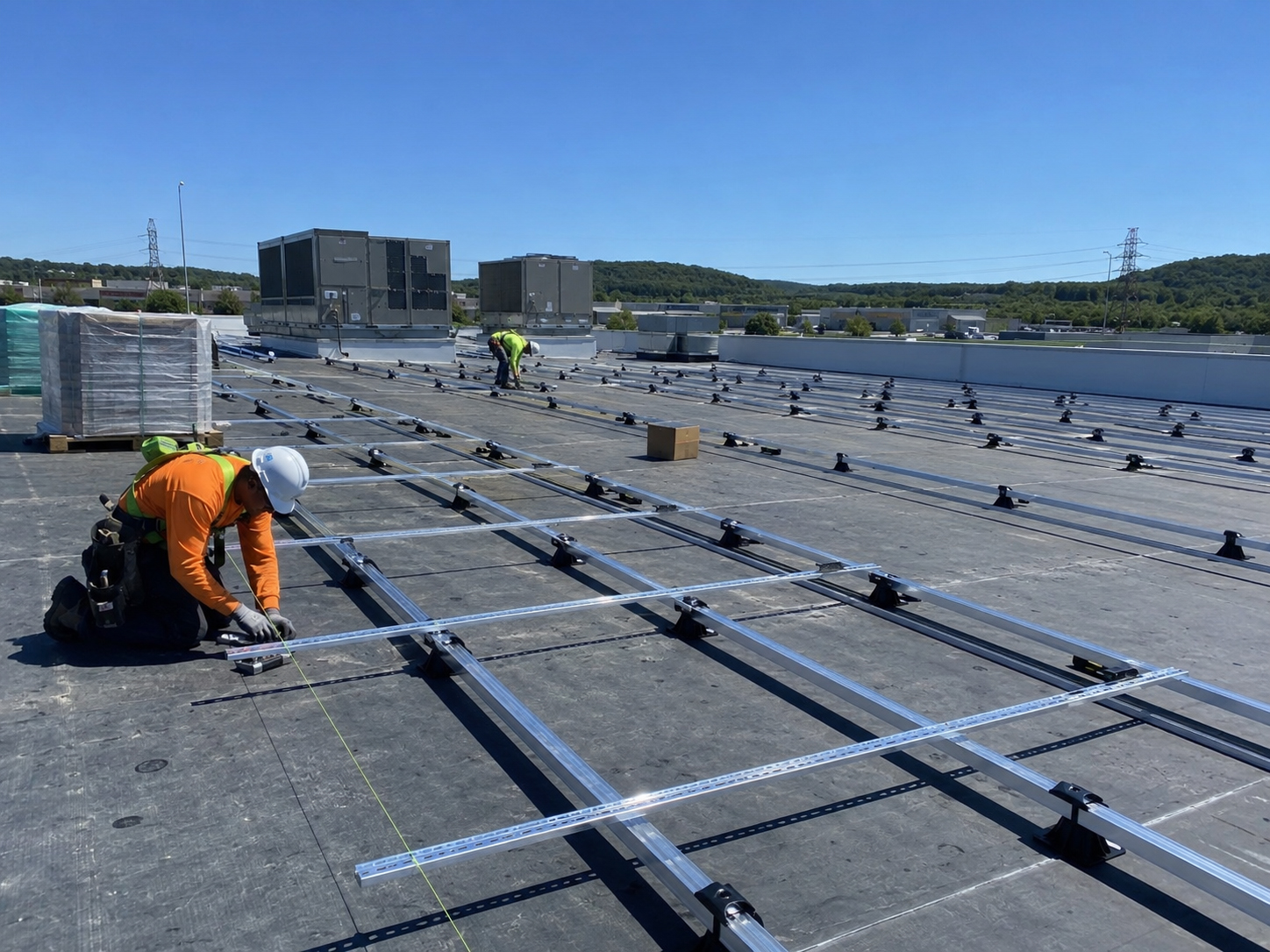
Flat roof racking should consider slip sheets, walk pads, equipment staging, sharp edges, vibration, thermal movement, drainage paths, and service traffic. A commercial roof may have years of life left, but not if solar work damages the membrane.
Identify roof type, condition, prior repairs, seams, drains, and ponding areas.
Racking, ballast, conduit, and walk areas should avoid unnecessary membrane damage.
Roofers and service crews still need to maintain the roof after the array is installed.
Drainage and layout
Do not let the array create roof drainage problems.
A flat roof is rarely truly flat. Water must still find its way to drains, scuppers, and gutters.
Solar layout should avoid blocking drains, narrowing service paths, trapping debris, creating ponding areas, or making roof maintenance difficult. A high-production layout that harms roof drainage is not a good design.
Drains and scuppers
Keep roof drainage points accessible and clear of equipment, ballast, and debris traps.
Walk paths
Leave practical routes for roofers, electricians, inspectors, and solar service crews.
Debris control
Racking rows should not create hidden areas where leaves, trash, or standing water accumulate.
Plain-language summary: a flat roof solar layout should help the roof remain maintainable, not turn it into a maze of trapped water and blocked drains.
Wind uplift
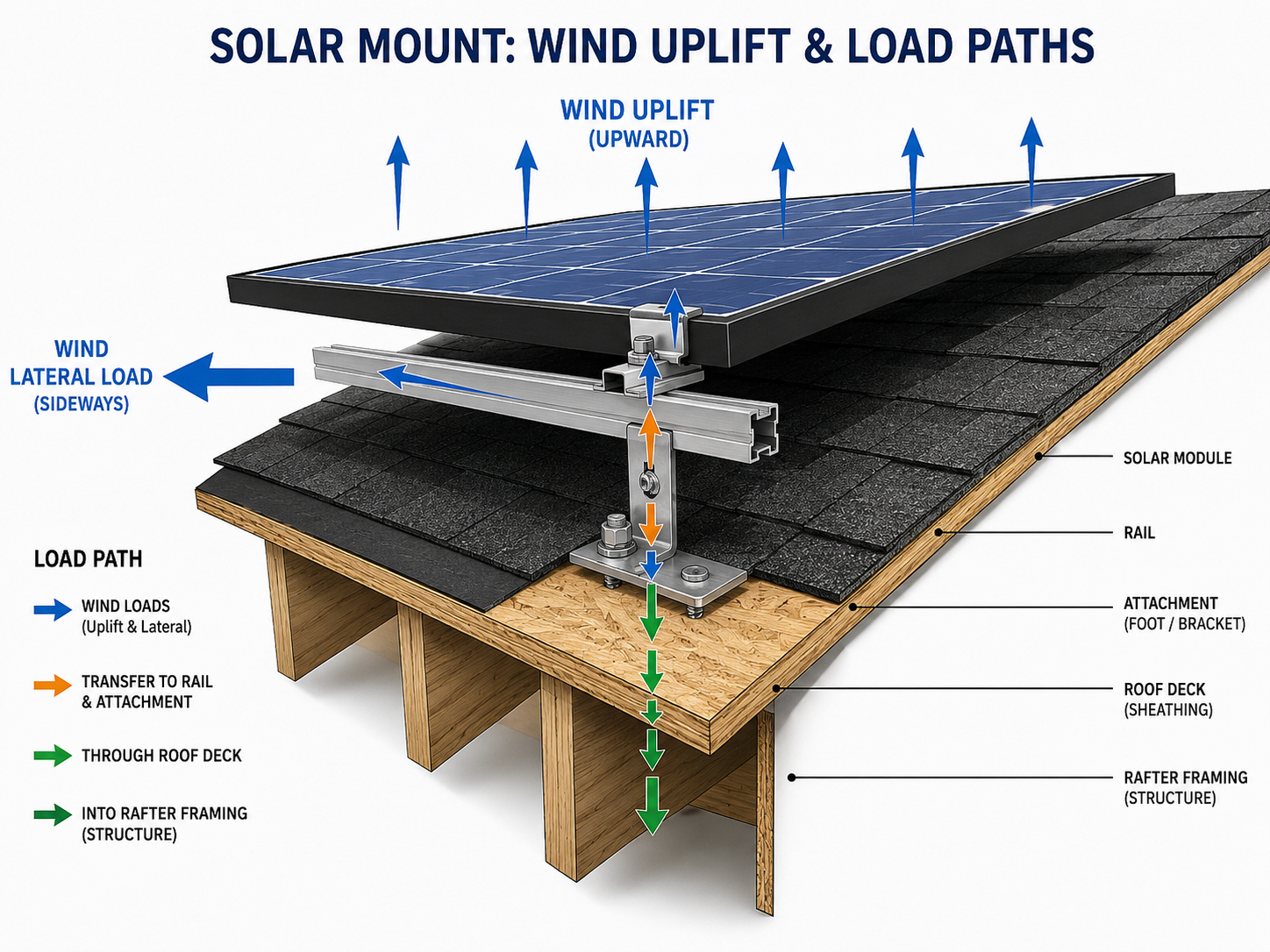
Flat roof arrays must be designed for wind zones.
Wind does not treat every part of the roof the same.
Roof edges, corners, parapets, exposure, array height, tilt angle, and row spacing can affect wind uplift and ballast requirements. A flat roof racking layout must explain how the array resists uplift, sliding, and overturning.
Practical rule: the ballast plan and wind design must agree. A neat-looking array still needs to stay on the roof.
Roofer and solar contractor
Commercial flat roofs need roof-solar coordination.
The roofer sees the membrane. The solar contractor sees the array. The building owner needs both protected.
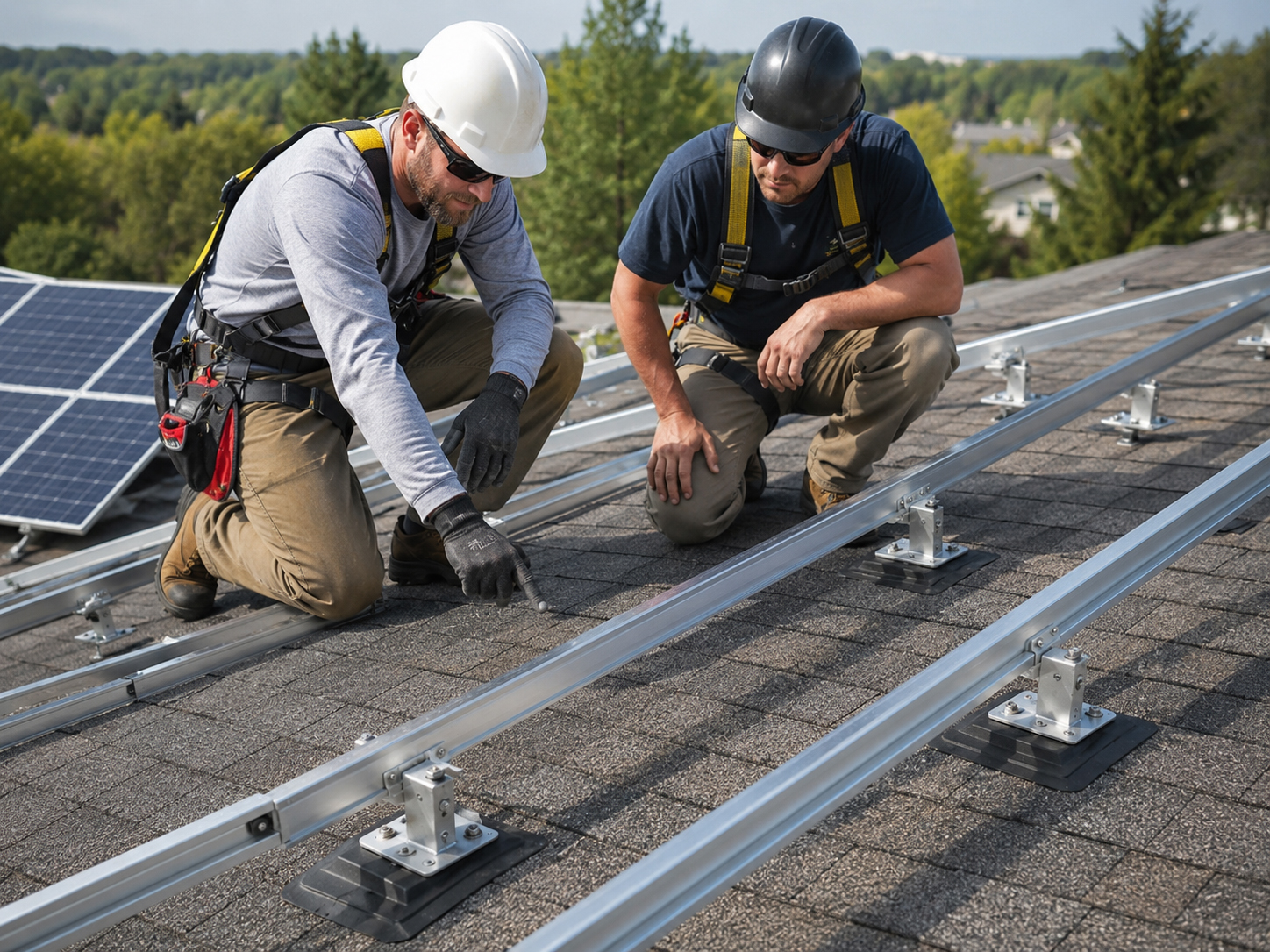
Before installation, the roofer and solar team should understand membrane condition, warranty concerns, roof access, ballast contact points, drainage, penetrations, walk pads, and maintenance needs. This coordination reduces avoidable roof damage and later disputes.
SolarMount.com field note: a commercial roof is an asset. Solar should improve the property, not shorten the roof’s service life.
Owner questions
What should a building owner ask about flat roof solar?
The right questions protect the roof, the building, and the solar investment.
Roof questions
- How old is the flat roof membrane?
- Are there ponding or drainage issues?
- Are there known roof leaks or prior repairs?
- Will ballast or racking affect the roof warranty?
- Where will walk pads or protection sheets be used?
- How will the roof be serviced after solar is installed?
Solar layout questions
- How much ballast is being added?
- Has the roof load been reviewed?
- How will drains and scuppers remain accessible?
- What happens in roof edge and corner wind zones?
- Where will conduit, inverters, and disconnects go?
- How will future solar service crews reach the array?
Good owner question: “How does this flat roof solar design protect the membrane, handle ballast weight, preserve drainage, and allow future roof service?”

Permit and inspection
The flat roof plan set should explain the mounting logic.
Inspection readiness begins with clear documents and clean field work.
The plan set should address roof type, racking method, ballast, structural loading, wind zones, setbacks, access pathways, electrical equipment, conduit routing, grounding, labeling, and inspection requirements.
Plain-language summary: the array should be understandable to the owner, installer, roofer, engineer, inspector, and future service team.
Related field guide pages
Continue the flat roof review.
Flat roof conclusion
Protect the membrane. Respect the load. Preserve the drainage.
Flat roof solar mounting should begin with roof condition, membrane protection, ballast, roof loading, wind uplift, drainage, access paths, and serviceability.