
Concrete tile field guide
Concrete tile solar mounting needs a roof-specific review.
Concrete tile roofs can support beautiful solar installations, but the mounting conversation must begin with tile condition, underlayment age, roof access, waterproofing, structural attachment, replacement tile planning, and future serviceability.
Review before method
Concrete tile is durable, but it is not simple.
The roof system below the tile matters as much as the tile you see.
Concrete tile roofs vary by profile, age, condition, underlayment, fastening method, slope, access, and prior repairs. Solar mounting should be selected after the whole roof assembly is understood. A good review protects the tile, the underlayment, the waterproofing layer, and the long-term service path.
SolarMount.com rule: do not treat concrete tile as just a hard surface. Review the underlayment, water path, access, tile condition, and service plan before mounting solar.

Concrete tile checklist
What should be reviewed before solar is mounted?
Concrete tile solar mounting succeeds when the roof assembly, access path, and waterproofing plan are reviewed before the array layout becomes final.
Tile profile
Identify the concrete tile profile, thickness, shape, fastening condition, and whether replacement tiles are available.
Tile condition
Look for cracked, chipped, loose, brittle, slipped, patched, mismatched, or previously repaired tiles.
Underlayment
The underlayment may be the real waterproofing layer. Its age and condition matter before solar is added.
Access path
Installation and future service require a safe plan for movement on the roof without unnecessary tile breakage.
Attachment plan
Solar mounting still needs a credible structural path into rafters, framing, or another approved support method.
Serviceability
Think ahead to tile replacement, leak investigation, underlayment work, panel removal, and future roof service.

Roof age matters
Concrete tile can outlast the waterproofing below it.
A concrete tile roof may look strong while the underlayment is aging beneath it.
Concrete tile is often durable, but the full roof assembly must be considered. The underlayment, flashing, valleys, penetrations, and prior repairs may determine whether solar should be installed now or whether roofing work should come first.
Practical rule: do not judge a concrete tile roof only by the visible tile. Review the underlayment and roof history before solar makes the roof harder to service.
Method planning
The mounting method should come after the roof review.
A concrete tile roof deserves a project-specific plan, not a generic shortcut.
Before selecting a method
- Confirm tile type, profile, and condition.
- Review underlayment age and prior leak history.
- Confirm roof slope, valleys, ridges, hips, skylights, and obstructions.
- Review rafter or structural target locations.
- Determine whether replacement tiles are available.
- Decide whether roofing work should happen before solar.
Before the array is completed
- Verify the mounting method matches the roof-specific plan.
- Verify waterproofing details are protected and documented.
- Verify tile reset or replacement work where applicable.
- Verify access paths and service clearances.
- Verify the field work matches the approved plan set.
- Confirm inspection readiness before concealment.
Important: this page is educational. Actual concrete tile solar mounting, attachment methods, waterproofing, flashing, underlayment repair, structural review, tile replacement, and inspection requirements must follow the approved plan set, manufacturer instructions, roofing requirements, engineering requirements, local code, and qualified professional judgment.
Waterproofing first
The roof-protection plan matters more than the hardware name.
The homeowner does not need a hardware debate. The homeowner needs a dry, serviceable roof.
Concrete tile solar mounting should answer practical questions: how the roof will be protected, how the underlayment is respected, how water is managed, how tile breakage is handled, how attachments are made, and how the array can be serviced later.
Tile, underlayment, flashing, deck, rafters, slope, and drainage all matter.
The mounting method must respect how the concrete tile roof manages water.
Important roof-protection details should be inspected before the array hides them.

Access and tile breakage
Concrete tile needs careful installation access.
Even durable tile can break when access and staging are not planned.
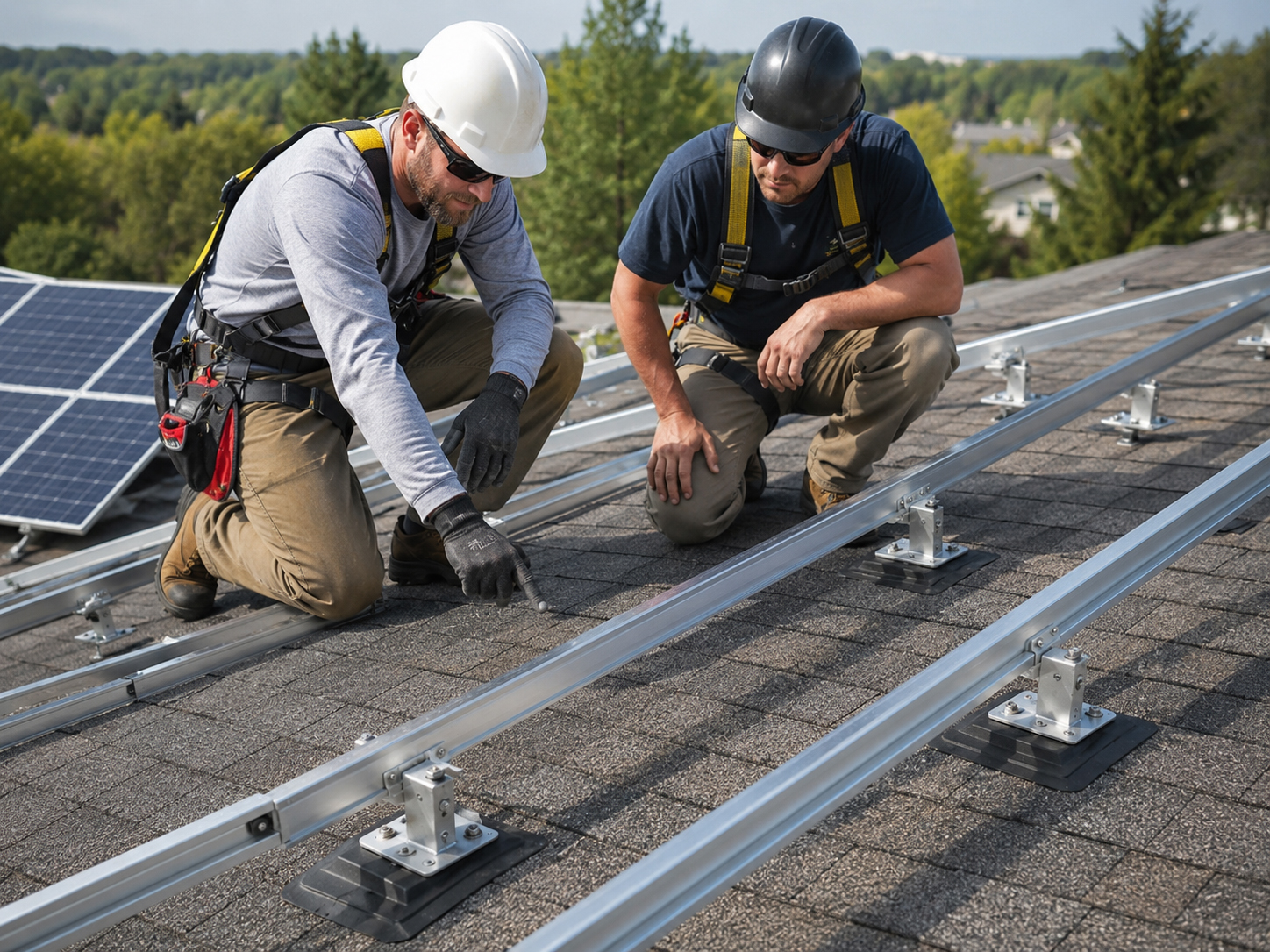
Solar installation requires workers, tools, materials, rails, modules, and inspection access. On a concrete tile roof, that activity must be planned carefully. The project should consider how crews will move, where materials will be staged, how replacement tiles will be handled, and how future service will reach the array.
Walk path
Safe roof movement should be planned to reduce unnecessary tile breakage and unsafe working conditions.
Replacement tiles
Matching replacement tiles can matter when tiles are already cracked, brittle, or hard to source.
Service access
The finished system should not make normal roof service or leak investigation unnecessarily difficult.
Plain-language summary: concrete tile solar planning should include the roof’s future, not just the installation day.
Trade coordination
Concrete tile projects benefit from roofer-solar coordination.
The solar contractor sees the array. The roofer sees the roof assembly.
A good concrete tile solar project may involve coordination between solar installer, roofer, designer, homeowner, and inspector. The discussion should include roof age, underlayment, tile condition, access, flashing, serviceability, and documentation.
Practical rule: if the underlayment or roof condition is uncertain, get the roof question answered before the array is installed.
Related tile roof pages
Concrete tile belongs in the larger tile roof review.
Continue with Spanish tile, general tile roof review, waterproofing, and roof condition pages.
Tile Roof Review
The general project-specific tile roof solar review.

Spanish Tile
Curved tile roof review, underlayment, access, and serviceability.
Roof Condition & Age
Review the roof before the array makes it harder to reach.
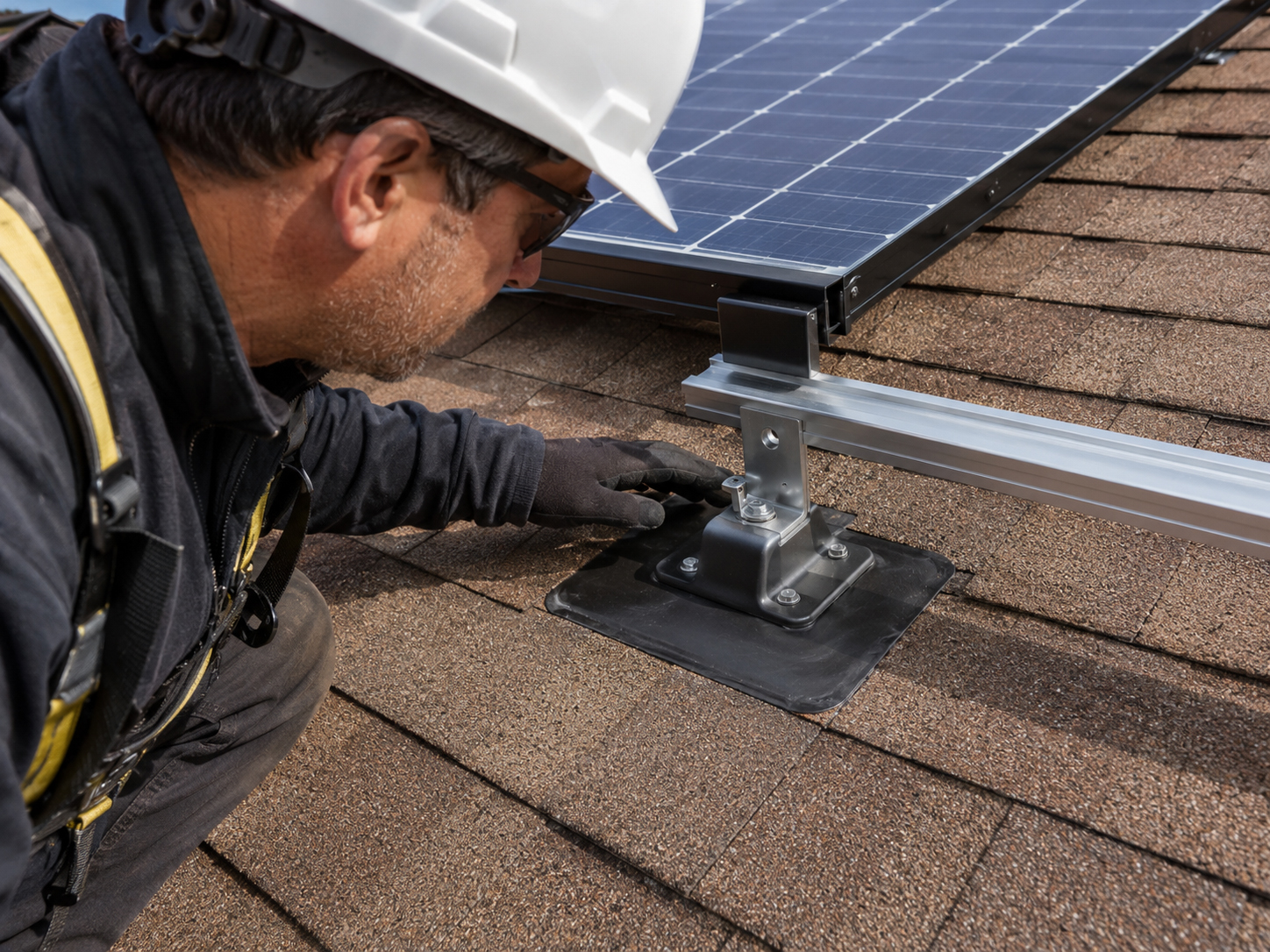
Roof Leak Prevention
Prevent leak problems before panels cover the details.
Homeowner questions
What should homeowners ask about concrete tile solar?
The best questions are practical and roof-first.
Ask whether the roof condition and underlayment have been reviewed, whether replacement tiles are available, how the installation crew will access the roof, how waterproofing is protected, and how the system can be serviced later.
Good homeowner question: “Is this concrete tile roof and underlayment ready for solar, and how will the roof be protected and serviced after installation?”


Inspection and documentation
The concrete tile method should be explainable.
A completed installation should not leave unanswered roof questions under the panels.
The plan set, field photos, roof-protection details, service approach, and inspection pathway should show how the concrete tile roof was respected and protected during solar installation.
Plain-language summary: the finished solar array should leave behind a protected roof, not a mystery for the next service call.
Concrete tile conclusion
Strong tile still needs careful review.
Concrete tile solar mounting should begin with roof condition, underlayment, waterproofing, access, replacement tile planning, serviceability, and a project-specific method.